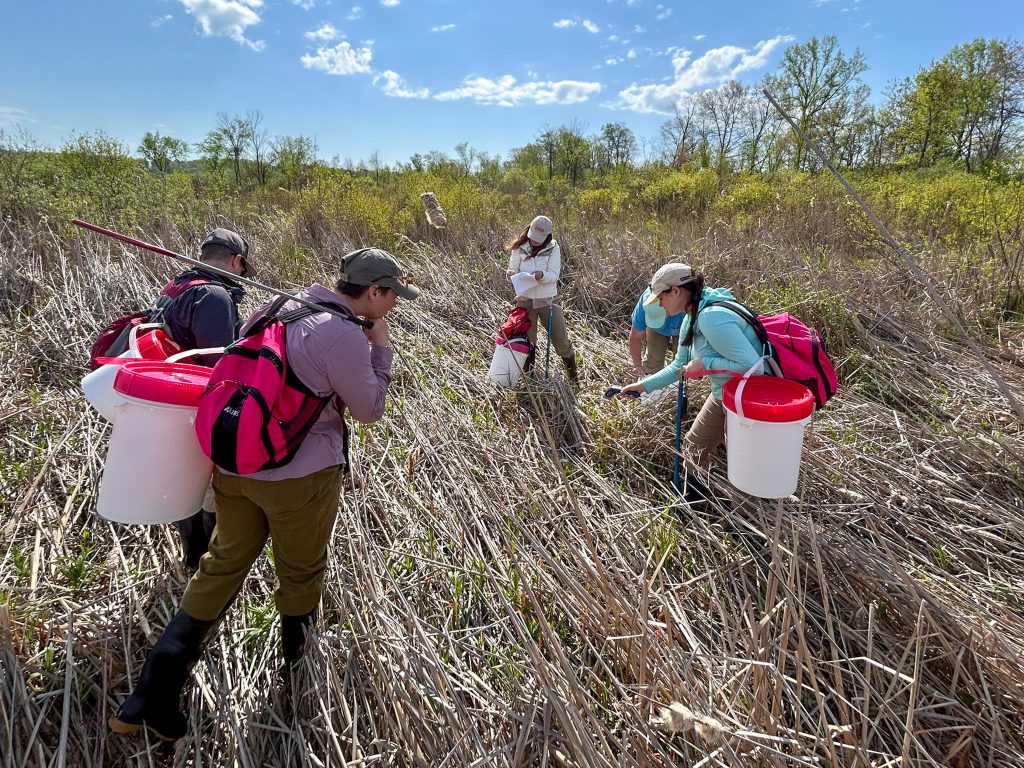
 When most people think about conservation fieldwork, they probably picture tracking wolves through snowy forests or studying sea turtles on tropical beaches. In reality? Sometimes conservation work means carefully and systematically searching through tall Michigan grass and mucky habitat, hoping to find a rattlesnake to gain important information about local populations.

Keeper Paige (Left), and Keeper Delanie (Right)
Last week, two members of Potter Park Zoo’s animal care team, Keeper Delanie and Keeper Paige, participated in the 17th annual Eastern Massasauga rattlesnake survey through the SAFE Eastern Massasauga Program alongside researchers and conservation partners at the Edward Lowe Foundation.
The Eastern Massasauga rattlesnake (EMR) is Michigan’s only venomous snake and is currently listed as a federally threatened species. While that title may sound intimidating, these snakes are actually shy, secretive animals that play an important role in healthy ecosystems.
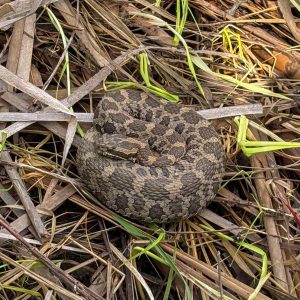 As predators, Eastern Massasaugas help manage rodent populations and contribute to balanced wetland habitats throughout the Great Lakes region. Unfortunately, habitat loss, disease, road mortality, and human persecution have caused populations to decline across much of their native range. That’s why long-term conservation efforts like this annual survey matter so much.
Throughout the week, trained professionals carefully surveyed 178 acres of habitat to safely locate, identify, measure, and collect data from wild Eastern Massasaugas before releasing them exactly where they were found. Researchers collect genetic and health information to help monitor disease and better understand the long-term health of the population.
Despite chilly weather during this year’s survey, the snakes were out in full force. Surveyors documented 76 Eastern Massasauga rattlesnakes, surpassing the historical average of 52.9 snakes and marking the fourth-highest total recorded during the survey’s 17-year history.
The survey is part of the SAFE Eastern Massasauga Program. SAFE, which stands for Saving Animals From Extinction, is an initiative led by the Association of Zoos and Aquariums that connects accredited zoos, aquariums, researchers, and conservation organizations to support threatened wildlife both in human care and in the wild.
Like many conservation efforts, the work is highly collaborative. Researchers, zoological institutions, veterinarians, field biologists, and animal care professionals all contribute pieces to a much larger puzzle focused on protecting the future of the species.
For Keeper Paige, participating in field conservation work added another layer of appreciation for a species many people misunderstand.
“It’s always exciting to participate in fieldwork and see the connection between the animals we care for at the zoo and the larger conservation efforts happening in the wild. It was very special to get the opportunity to be part of a project that directly supports the future of this Michigan native species” — Keeper Paige
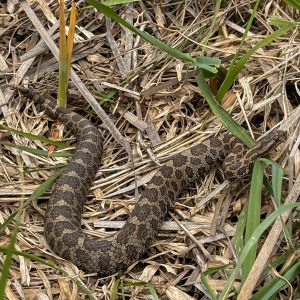 Protecting wildlife starts with understanding it. For the Eastern Massasauga rattlesnake, long-term surveys and collaborative conservation efforts like this one play an important role in helping secure the future of this threatened native species.
At Potter Park Zoo, conservation includes helping people better understand misunderstood species like the Eastern Massasauga. Guests visiting Potter Park Zoo can even observe an Eastern Massasauga rattlesnake in the reptile building and learn more about this unique native species firsthand.