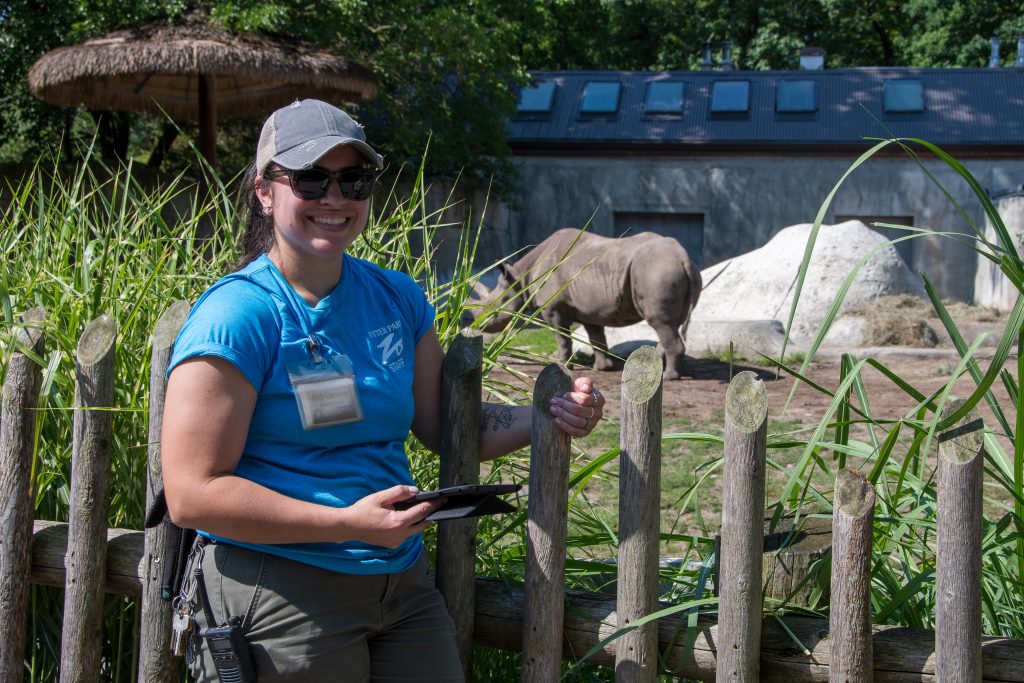
At Potter Park Zoo, animal care does not stop at daily routines. It is a continuous process of learning, adapting, and improving to ensure the highest standards of welfare for the animals who call our zoo home. One recent example of that commitment comes from Adrianna, a hoofstock keeper at Potter Park Zoo, who attended a specialized course focused on hoof care, with an emphasis on rhino feet.
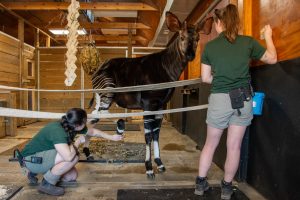
Keepers at Potter Park Zoo use positive reinforcement training to encourage animals to voluntarily present their feet, allowing staff to assess and care for them safely and proactively.
In November 2025, Adrianna participated in the Zoo Hoofstock Trim Program (ZHTP) at The Wilds in Cumberland, Ohio. This three-day intensive course is designed for animal care professionals working with rhinos. The training brought together keepers from AZA-accredited institutions across the country to dive deep into the science, anatomy, and hands-on techniques behind proper hoof care.
The ZHTP course placed a strong emphasis on rhino foot care, an especially important topic given the size and weight of these animals. Rhinos must distribute thousands of pounds across just four feet, making foot health essential to their well-being.
“Foot care is extremely important when it comes to hoofed animals,” Adrianna shared. “Locomotion is their main way of living. They have to move to get to food, water, or even just to stand.”
Hooves are made of keratin, the same material as human hair and nails, they continue to grow and require thoughtful management throughout the animal’s life. This is where training plays a critical role. Keepers at Potter Park Zoo use positive reinforcement training to encourage animals to voluntarily present their feet, allowing staff to assess and care for them safely and proactively. Proper hoof care supports comfort, mobility, and overall health.
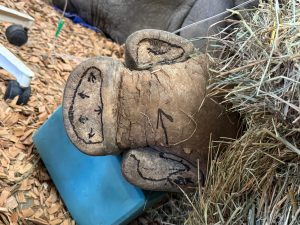
The training also explored nail growth, common causes of cracks or overgrowth, and how to “read” tissue to prevent future issues.
During the course, Adrianna and her classmates studied the bones, muscles, and movement of the rhino’s foot, learning how anatomy affects how a rhino walks and stands. The training also explored nail growth, common causes of cracks or overgrowth, and how to “read” tissue to prevent future issues. The program combined in-depth lectures with hands-on learning, giving participants both knowledge and practical experience. After taking this course, Adrianna feels more confident evaluating rhino feet, including identifying overgrowth, stress on nails, excessive wear, or signs of healthy balance.
“Sometimes you learn things person to person and don’t always get to ask the ‘why,’” Adrianna explained. “This course really broke down the why, and that makes a huge difference.”
The class was intentionally small, with roughly 10 keepers from 10 different AZA facilities, creating an environment for meaningful discussion and collaboration. Adrianna connected with colleagues from across the country, even comparing rhino care practices with keepers as far away as Honolulu. These professional connections continue long after the course ends. Following the training, participants shared tools, techniques, and ideas for animal training and hoof care, strengthening care practices across institutions.
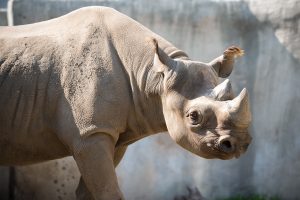
As an AZA-accredited institution, animal welfare is our top priority, and as standards evolve, so does our commitment to meeting and exceeding them.
The work of a zookeeper is never static. It requires curiosity, collaboration, and a willingness to keep learning. At Potter Park Zoo, we are proud to support ongoing professional development for our staff. As an AZA-accredited institution, animal welfare is our top priority, and as standards evolve, so does our commitment to meeting and exceeding them. By investing in continued education and training, we ensure that our animals receive thoughtful, science-based care every step of the way. Because sometimes, the most important care starts from the ground up.
Whether you’re visiting with family, friends, or on your own, Potter Park Zoo is a welcoming place where curiosity, conservation, and community come together.
There’s always something new to discover. Learn more and plan your visit today.