Characteristics
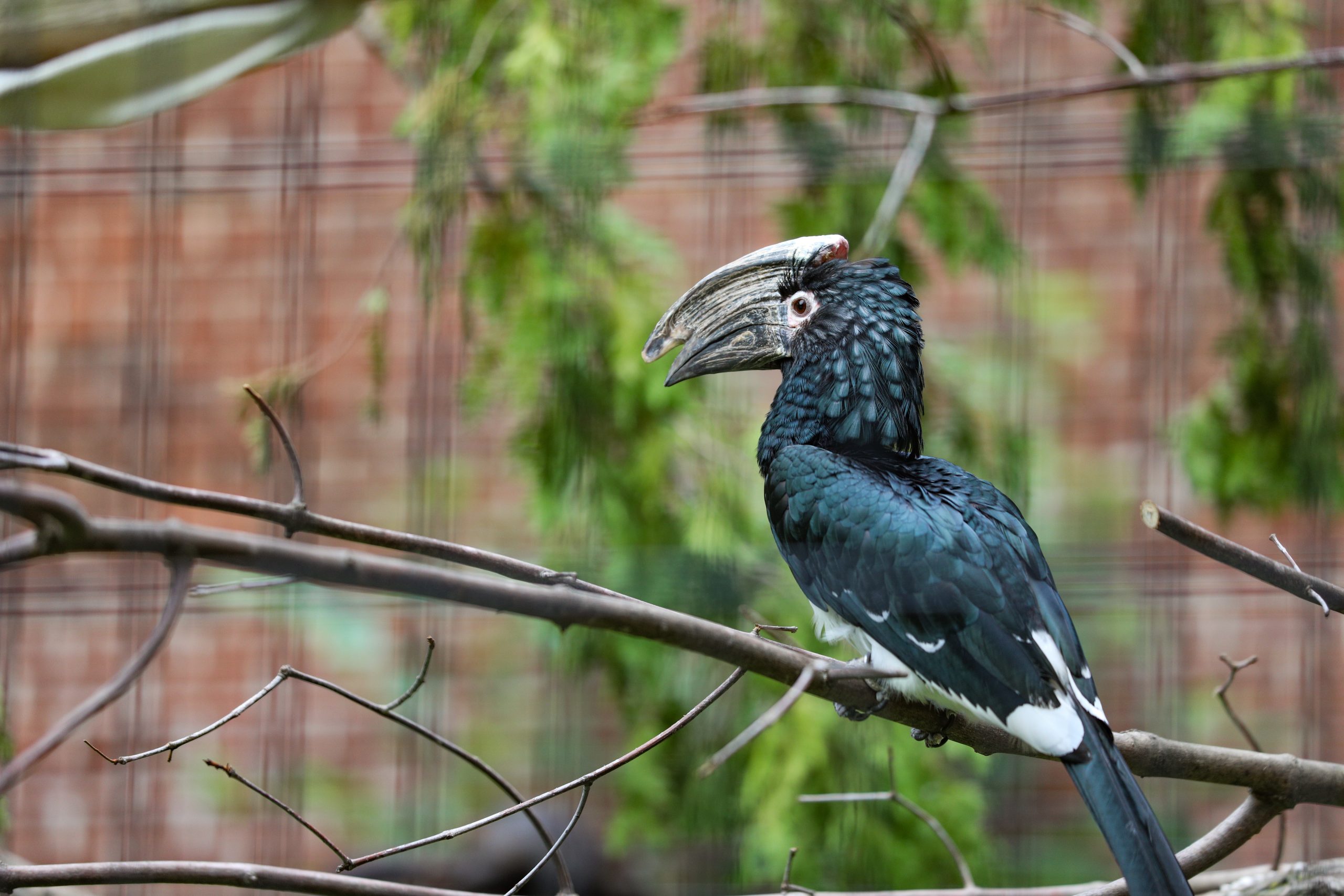
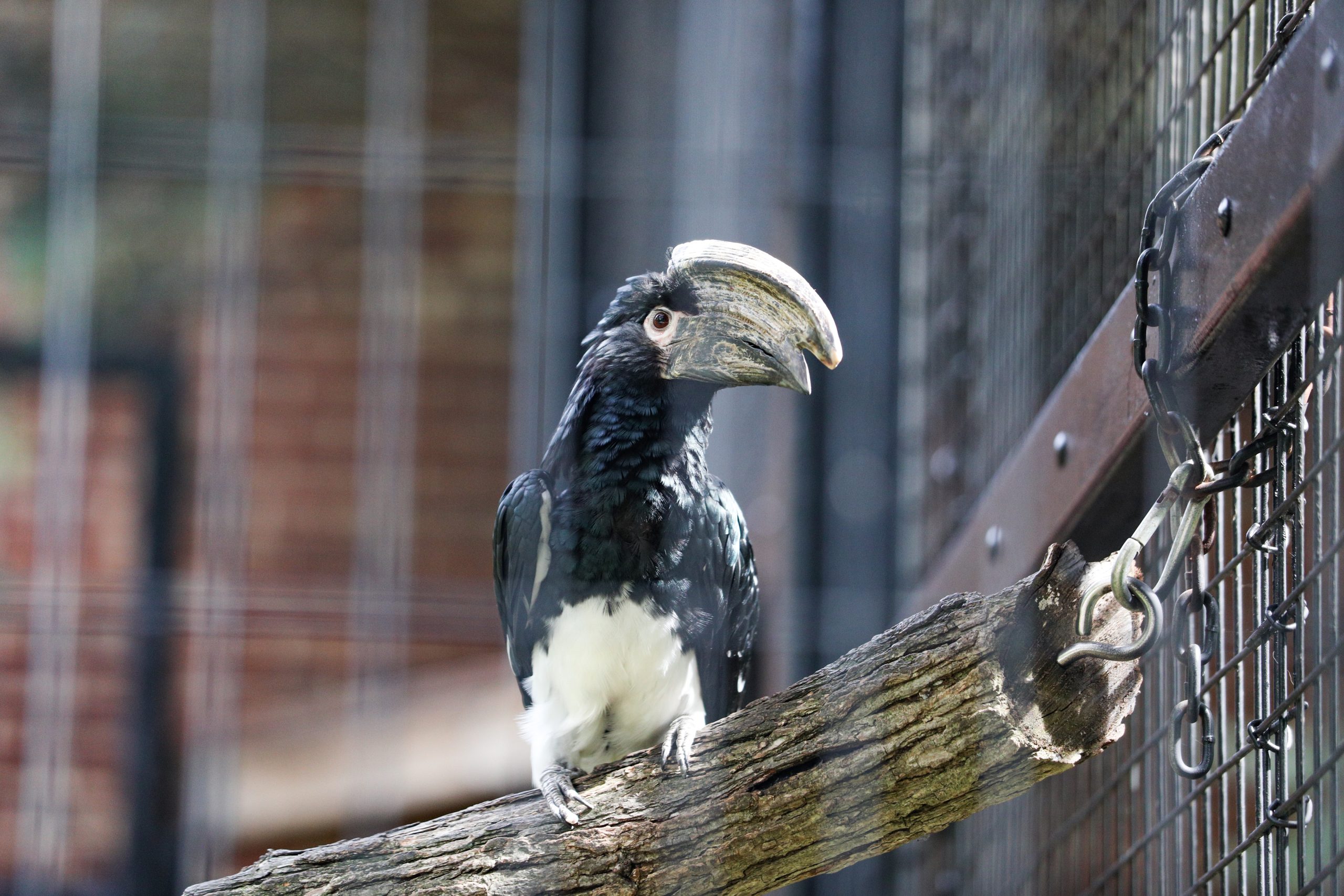
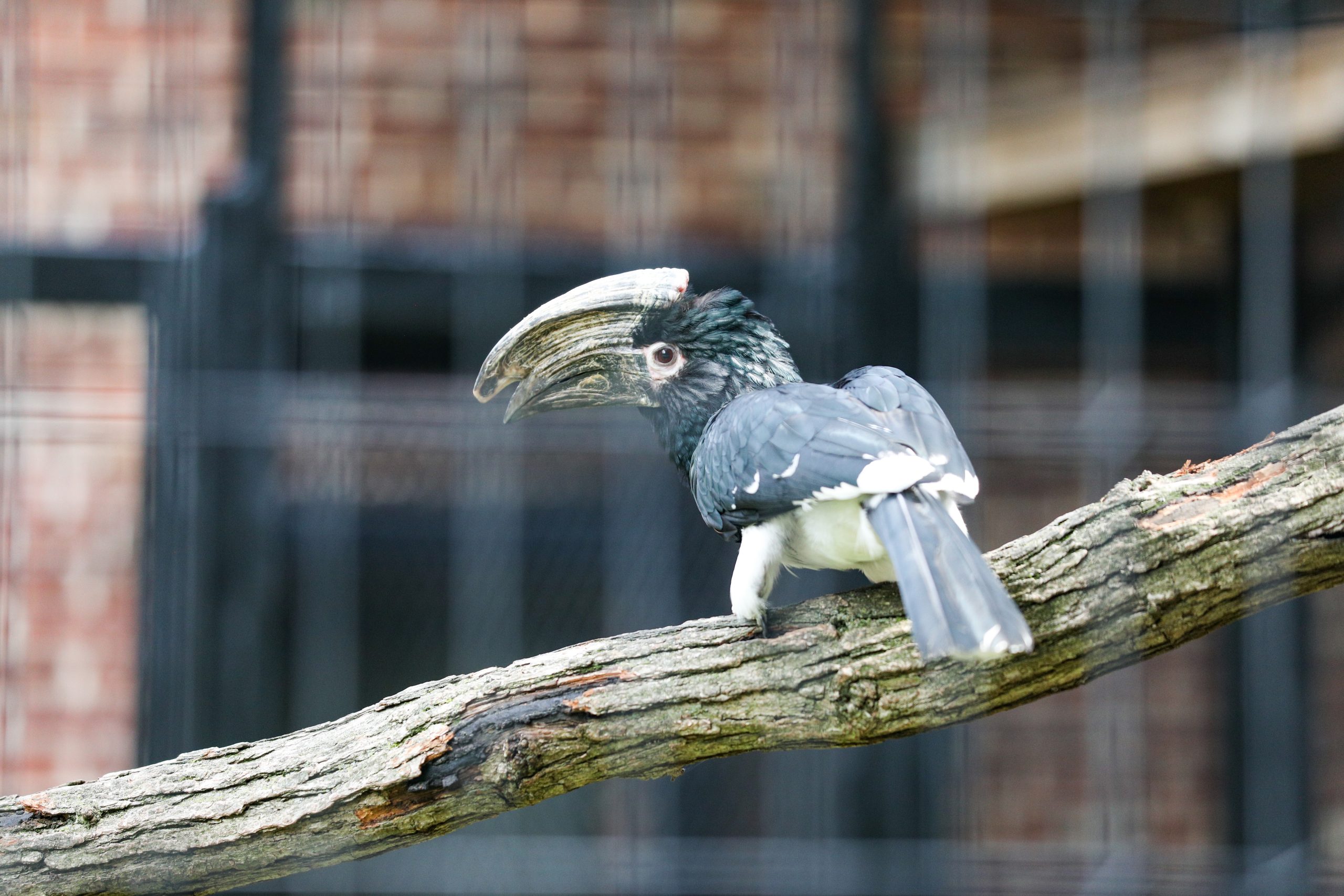
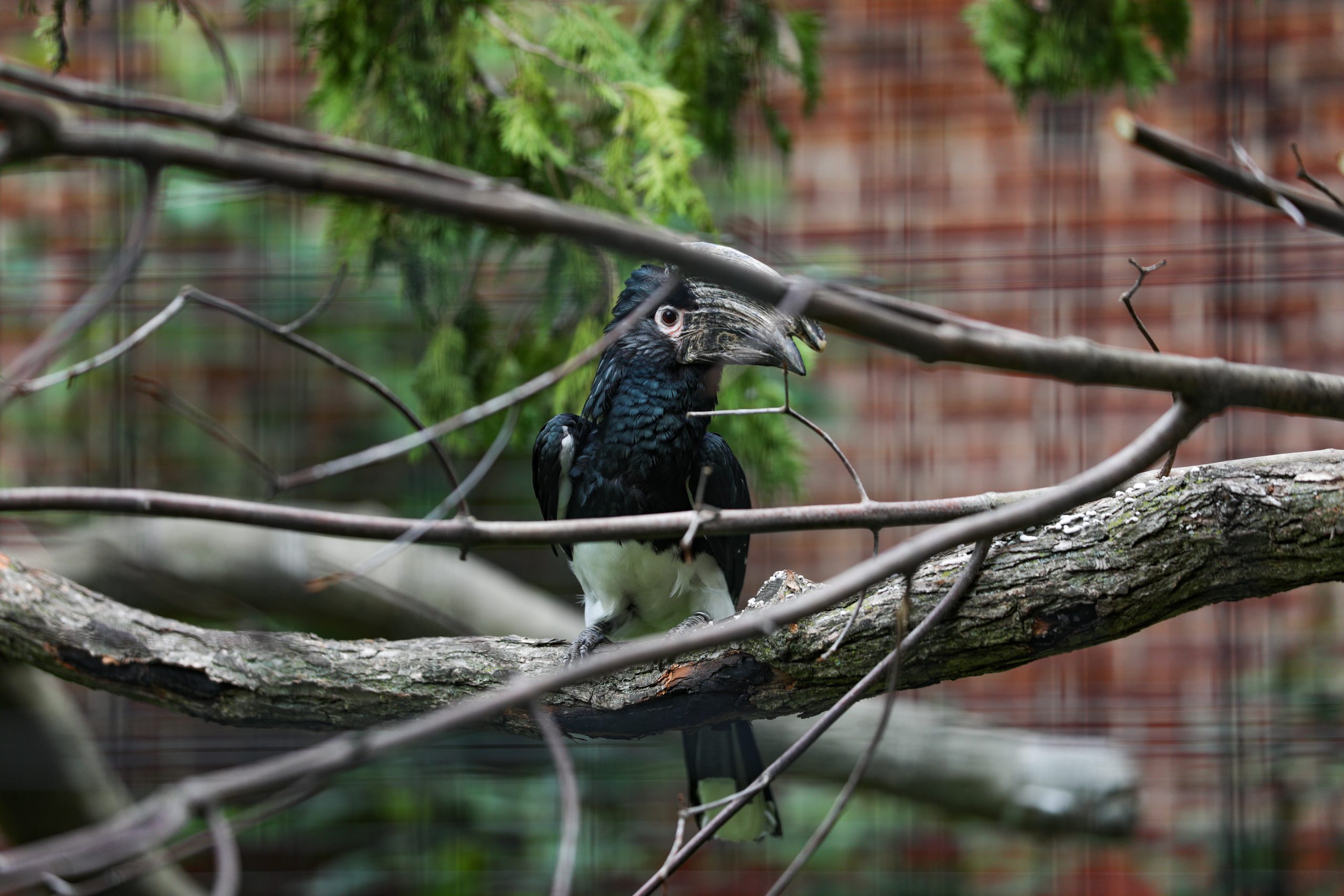
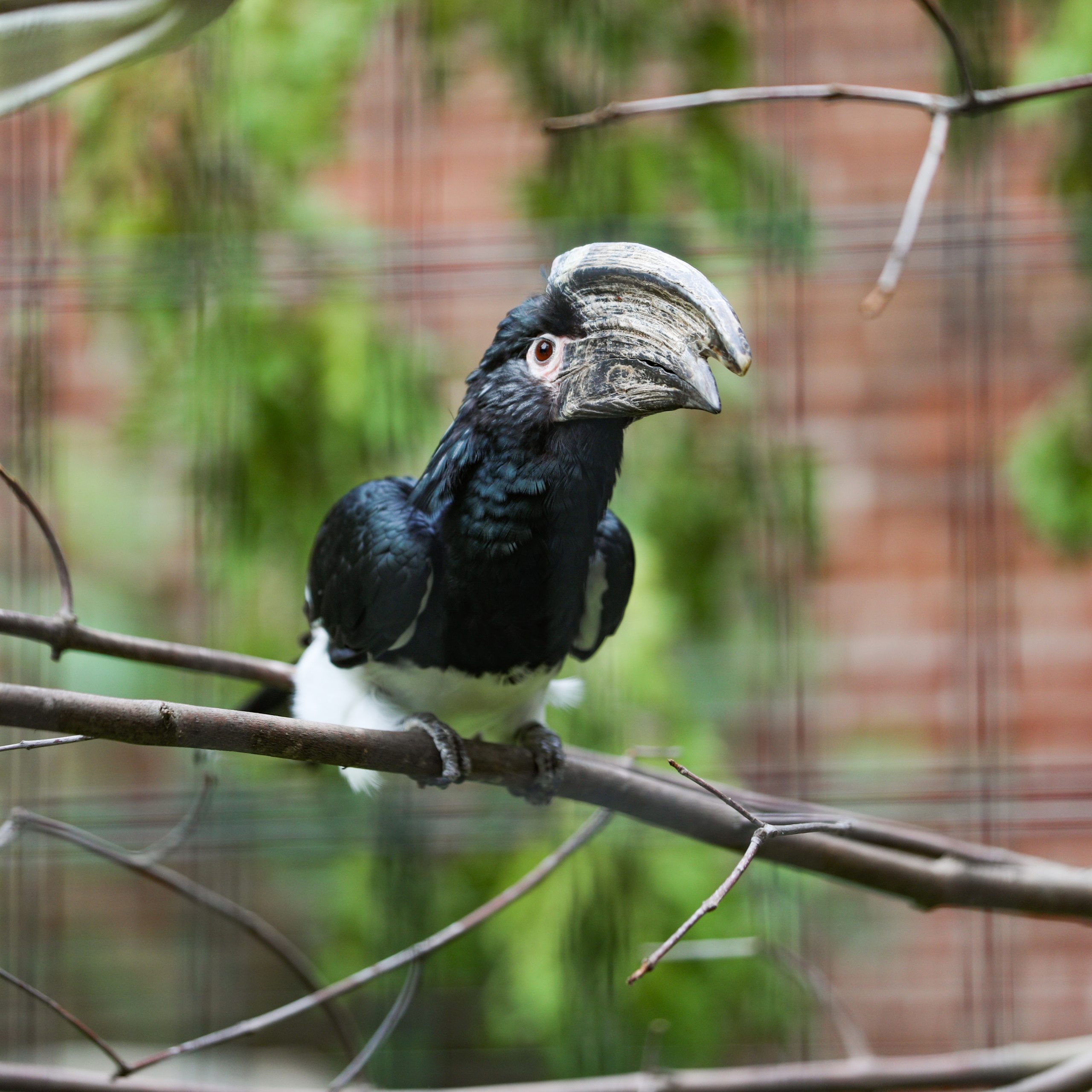
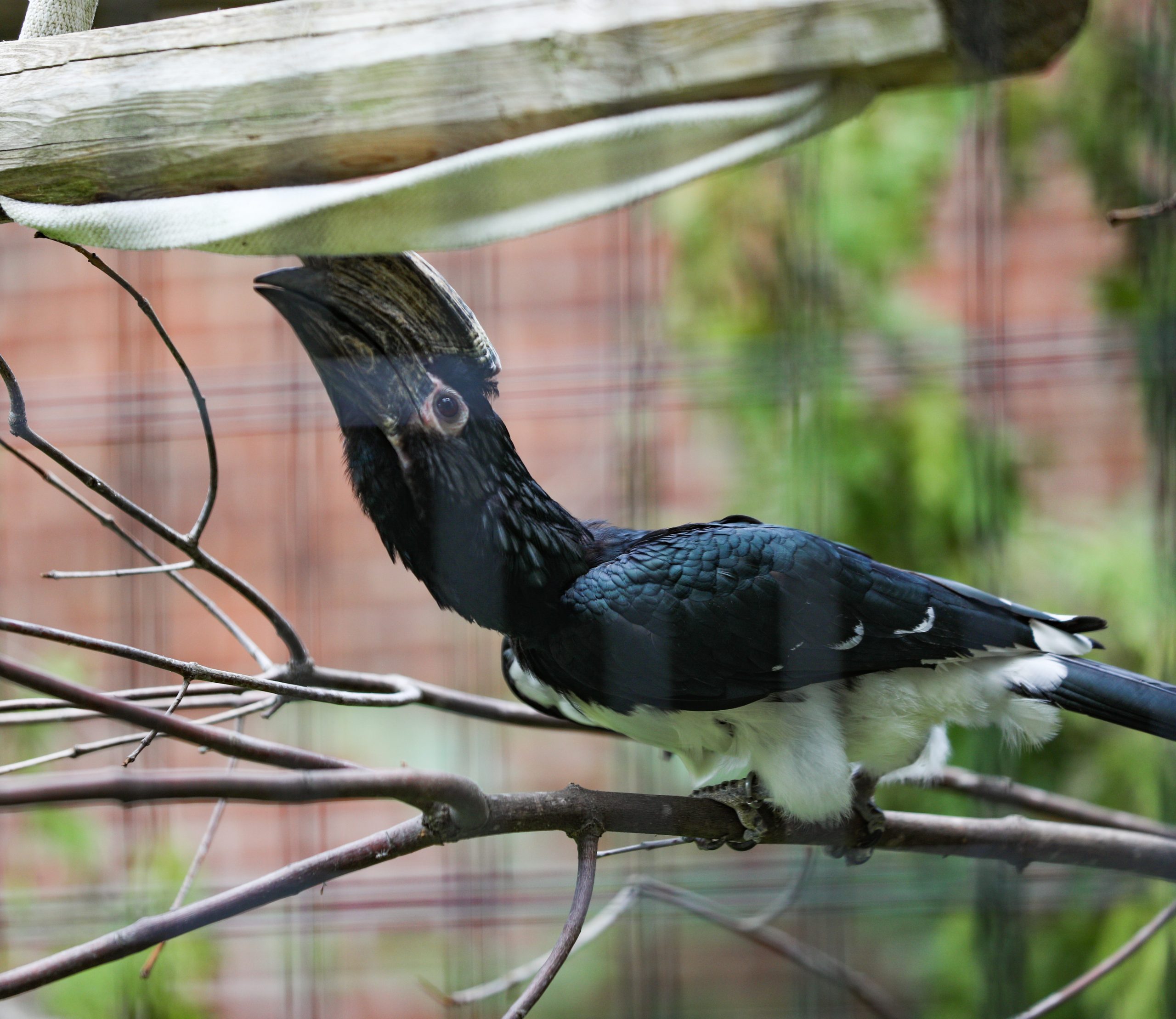
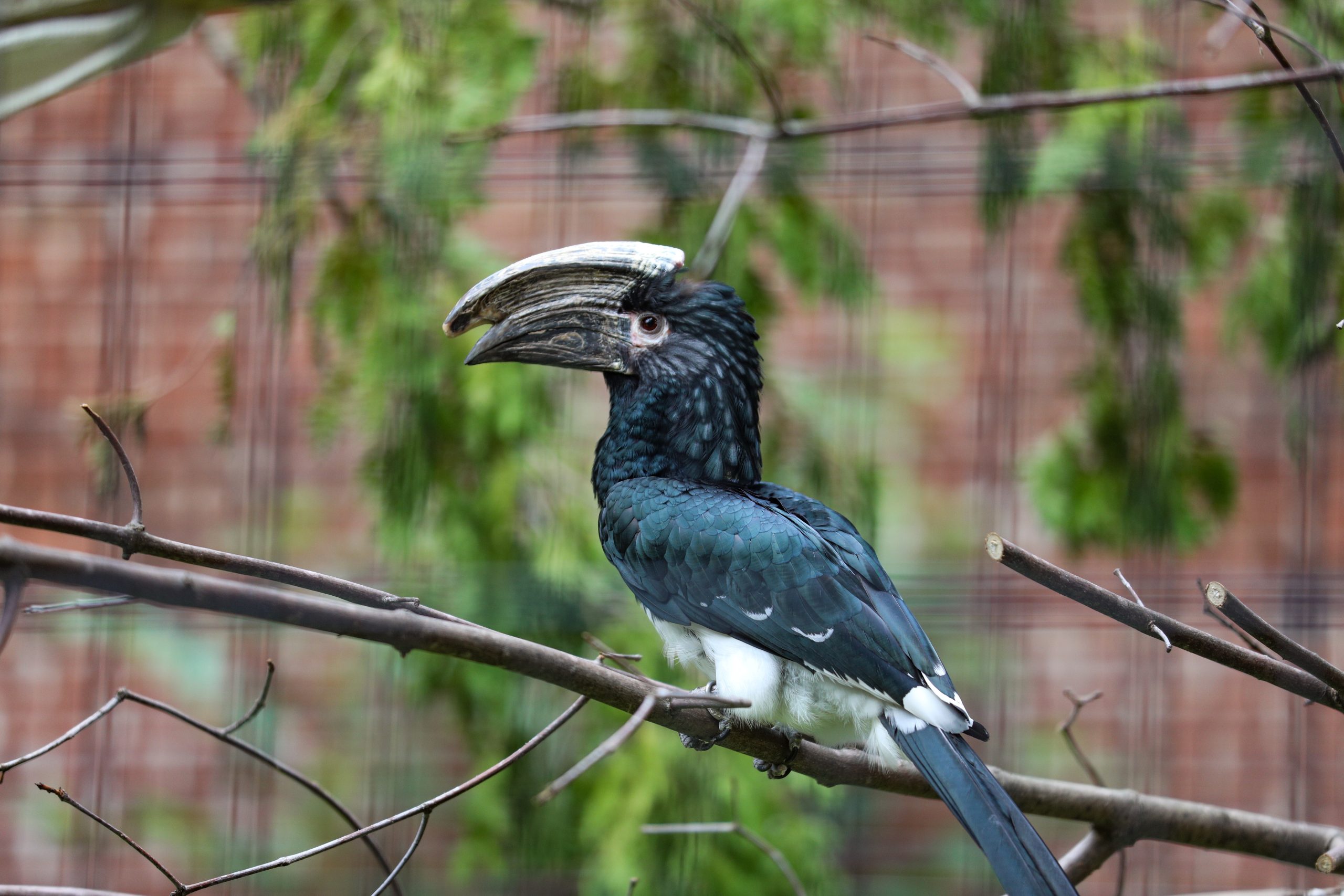
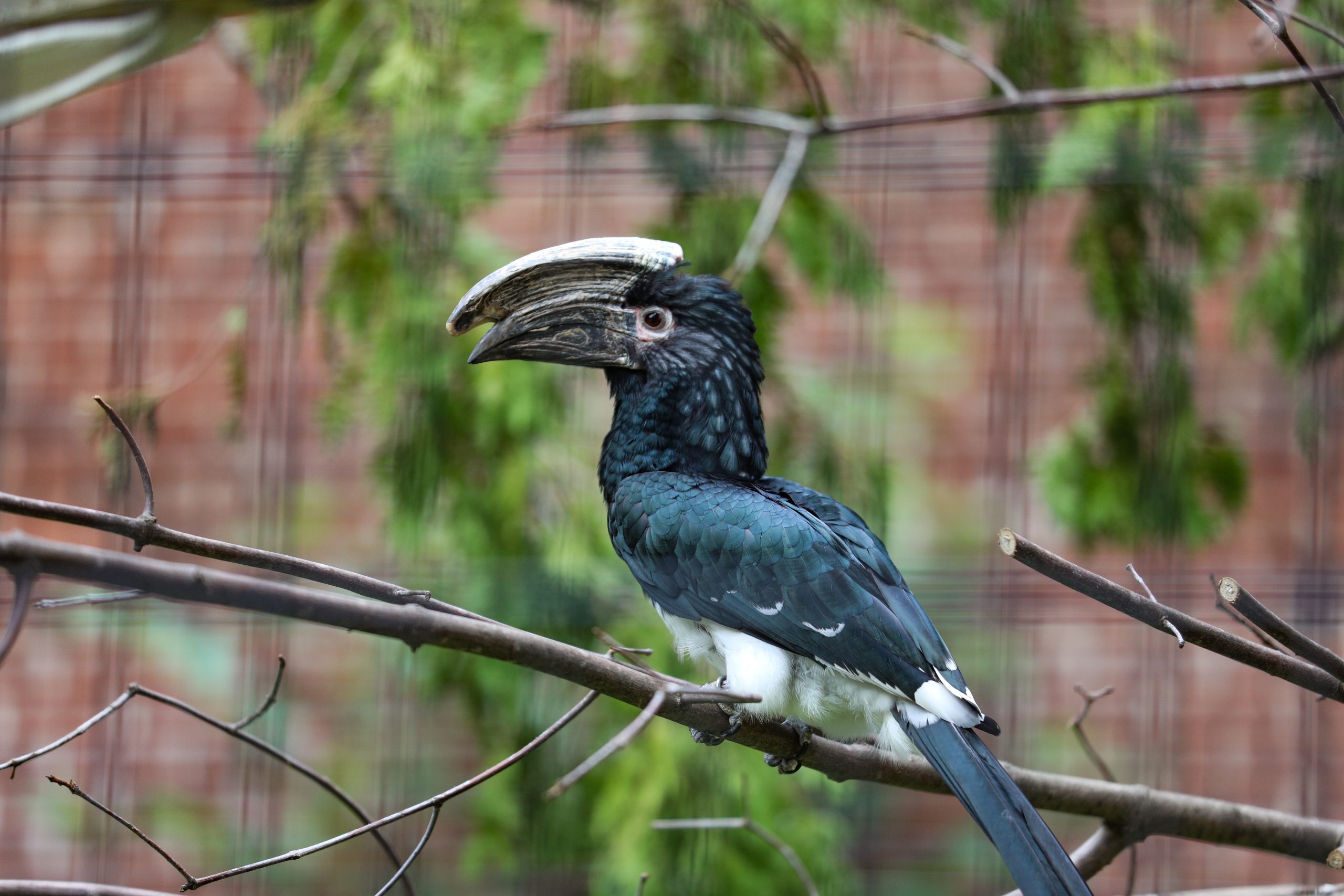
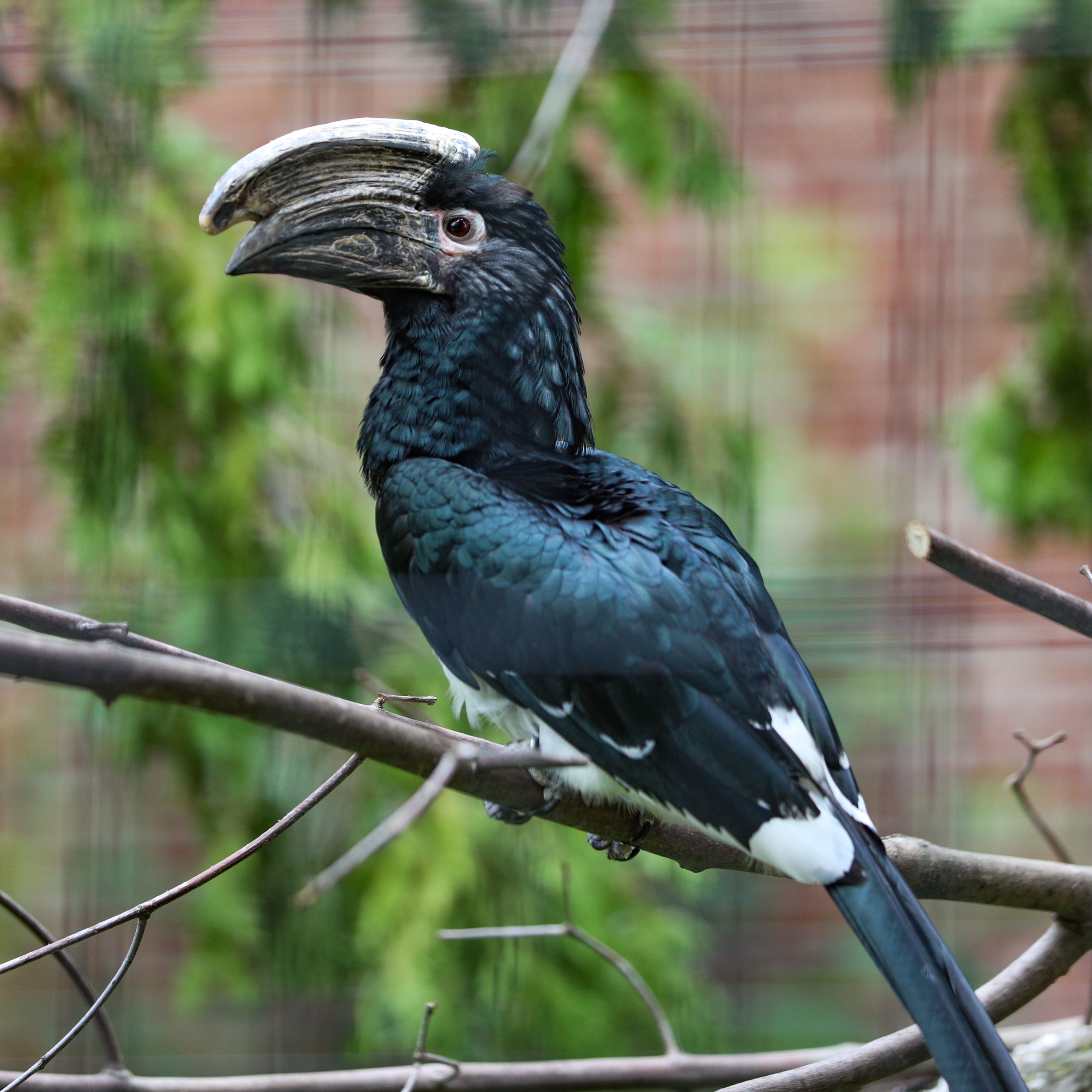
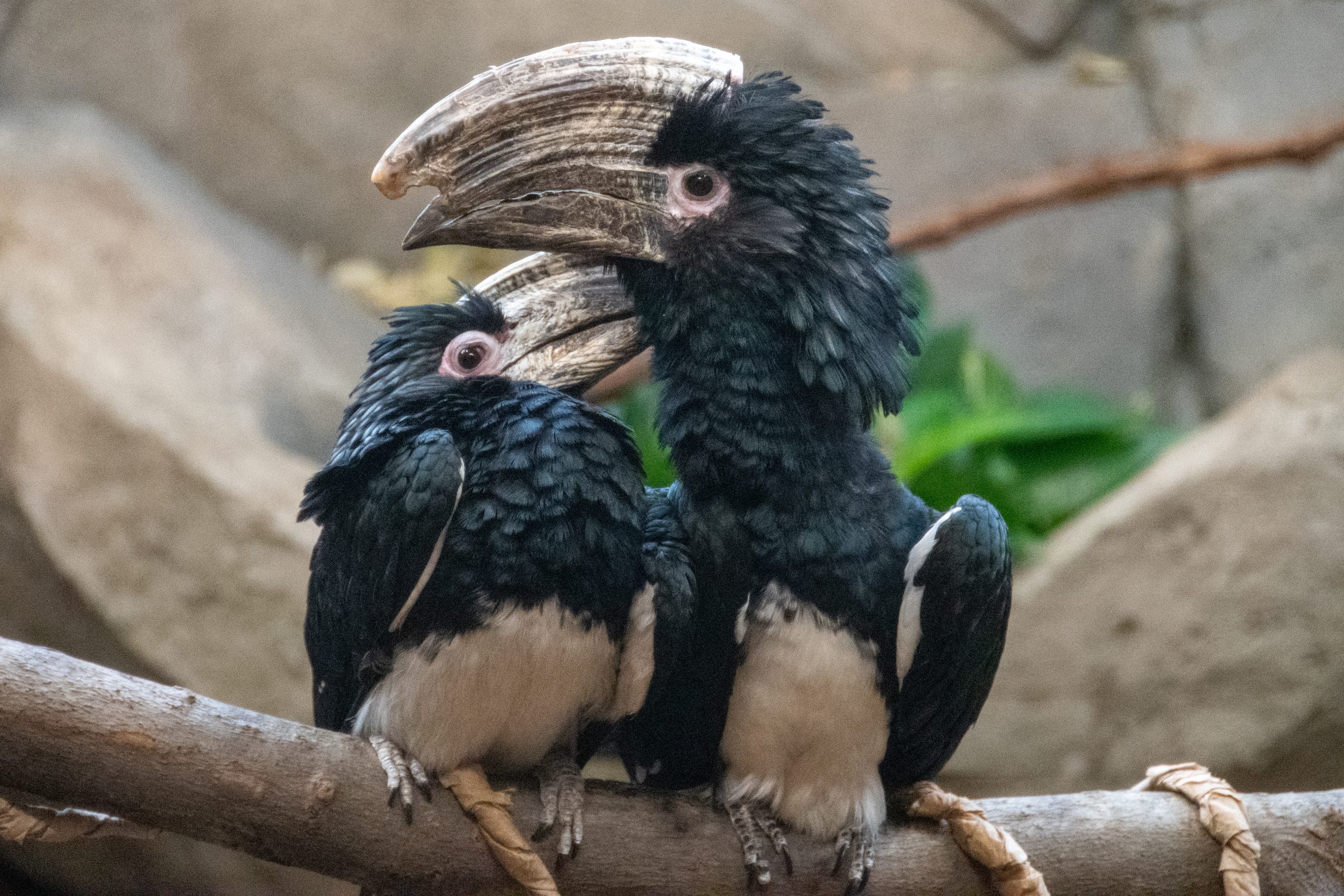
The trumpeter hornbill has black-and-white plumage that sets it apart from other hornbills. They have red facial skin. Although males and females look alike the males have a larger casque (extra bit on the top of the bill). This larger casque can also amplify his call.
Behavior
Hornbills mainly eat in the forest canopy and avoid picking up fruits from the ground. They will live in groups of two to five birds. Groups of trumpeter hornbills will come together to feed or roost in flocks of up to 200 birds. This usually occurs outside the breeding season. They communicate by making loud, wailing calls that some think sound similar to a human baby crying.
Did You Know?
Trumpeter hornbills are the largest obligate frugivore (diet almost entirely fruit) found in southern Africa
Reproduction
Trumpeter hornbills breed from October to January. The female will seal herself into a cavity using mud supplied by the male. She will not leave the nesting cavity until the young are about 50 days old. Both she and the chicks depend on the male for feeding; he passes food through a small opening in the cavity. The pair co-parent the offspring for about six months. Although little is known about the breeding, they are monogamous.
Our Animals
We have a male and female trumpeter hornbill pair on exhibit in the Reptile Building.
Threats
Threats include habitat loss, international trade and hunting. They may also be impacted by slash and burn agriculture.