From left to right: Keepers Jake, Delanie, and Bryan prepare the tadpoles for Puerto Rico.
Each year, Puerto Rican crested toad tadpoles raised at Potter Park Zoo make an incredible journey from Lansing, Michigan, to Puerto Rico, where they become part of an ongoing effort to recover one of the island’s most endangered species.
This year marked another successful breeding and release season and another contribution to a conservation partnership that Potter Park Zoo has been part of for more than 15 years.

Since joining the Puerto Rican crested toad recovery program in 2009, Potter Park Zoo has sent more than 26,000 tadpoles to Puerto Rico for release into the wild.
A Species Found Again
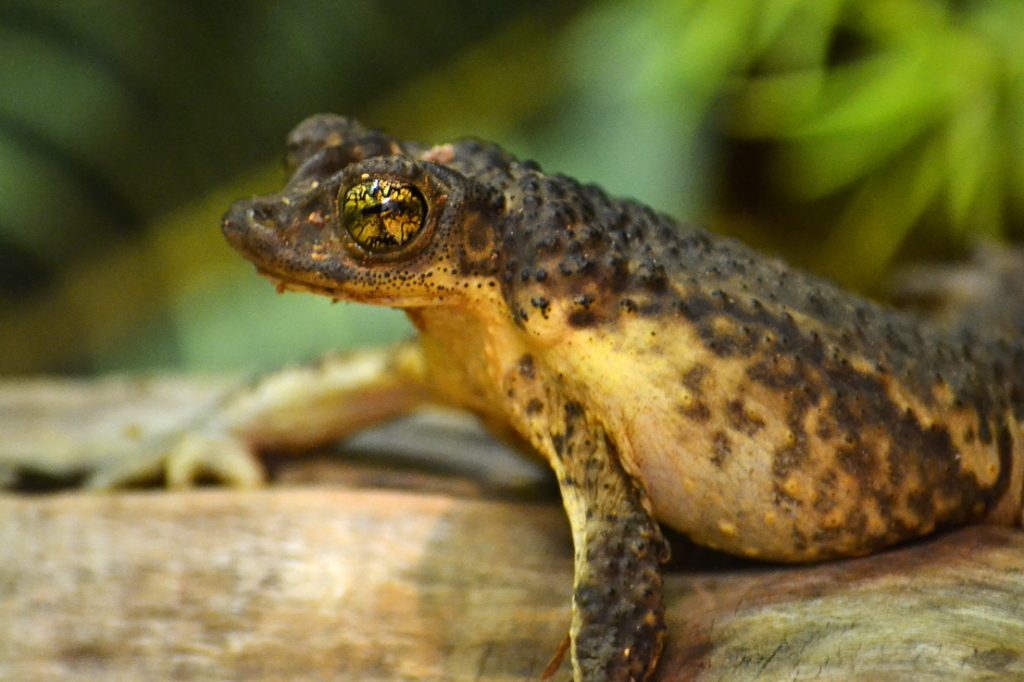
The Puerto Rican crested toad (Peltophryne lemur) is the only toad native to Puerto Rico. Once believed to be extinct, the species was rediscovered in 1967.
Today, Puerto Rican crested toads continue to face threats including habitat loss and competition from invasive species. In 1984, the Puerto Rican crested toad became the first amphibian to receive Species Survival Plan status through the Association of Zoos and Aquariums.
Its recovery has grown into a collaborative effort involving zoos, conservation organizations and individuals working toward the long-term survival of the species in the wild. Potter Park Zoo is proud to be one part of that work.
 Bringing Puerto Rico’s Rainy Season to Michigan
Breeding Puerto Rican crested toads in Michigan requires recreating some very specific conditions. In the wild, Puerto Rican crested toads reproduce during Puerto Rico’s spring and fall rainy seasons. At Potter Park Zoo, animal care staff recreate those seasonal conditions to encourage breeding.
The toads are first cooled to approximately 66 degrees Fahrenheit for one month, entering a period of inactivity called torpor. Temperatures are then increased to around 82 degrees and the toads begin feeding again. Breeding tanks are equipped with rain bars, while recordings of Puerto Rican crested toad calls help recreate the conditions associated with their breeding season.
When breeding is successful, the process moves quickly. Eggs can hatch in just 24 hours. The tadpoles remain at Potter Park Zoo for approximately one week, giving them time to grow before beginning their journey to Puerto Rico for release.
“Every tadpole we send to Puerto Rico is a small part of a much bigger conservation effort. It’s incredibly rewarding to see the work our team does here to contribute directly to the future of a species in the wild.”
— Jacob Brodie, Lead Keeper, Birds & Herpetology
 From Lansing to the Wild
Once in Puerto Rico, the tadpoles continue one of the fastest stages of their development. Puerto Rican crested toads breed in temporary ponds, so tadpoles must transform into young toads before those ponds dry up.
Approximately two to three weeks after hatching, the tadpoles undergo metamorphosis and become young toads. It can then take several years for them to reach their adult size of two to three inches.
Every release is part of a much larger conservation story. Since 2009, more than 26,000 tadpoles raised at Potter Park Zoo have made the journey from Michigan to Puerto Rico, contributing to the long-term effort to recover this unique species.
Want to help make an impact? By supporting Potter Park Zoo, you help make hands-on conservation efforts like the Puerto Rican Crested Toad program possible. Your gift helps our team continue working to protect threatened species and the wild places they depend on, here in Michigan and beyond. Make a gift today and help us continue this important work.